Porsche Cayenne E-Hybrid: electric range and real-world consumption
Up to 82 km on electric power, 2 h 40 for a full charge and a consumption that depends on how often you charge. The essentials on the Porsche Cayenne E-Hybrid, based on Porsche's figures, compared with the BMW X5 xDrive50e and the Mercedes GLE 400e.
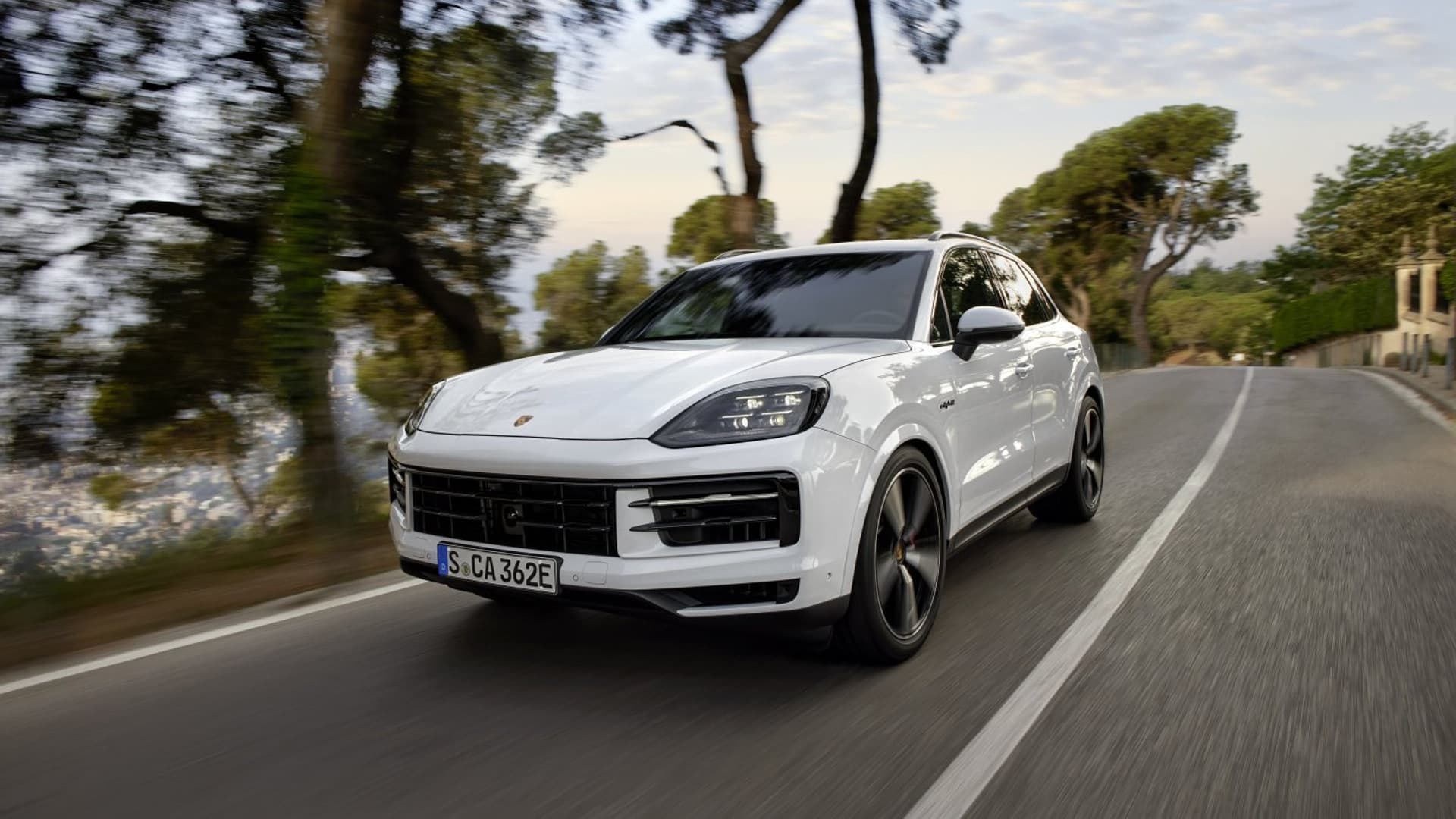
The Porsche Cayenne E-Hybrid combines a petrol engine with an electric motor and a battery that charges from a socket. Since the 2023 update, that battery holds 25.9 kWh, 8 kWh more than before, and the range includes three plug-in hybrid versions.
Before choosing one, two questions often come up. How far does it go without petrol, and how much does it really use? Here are the answers based on the figures published by Porsche, a comparison with the BMW X5 xDrive50e and the Mercedes GLE 400e, and what the Turismo subscription includes.
- on electric power at best, under the WLTP standard
- 82km
- of combined output for the S E-Hybrid
- 519hp
- to charge fully on an 11 kW charging point
- 2 h 40
What electric range does the Cayenne E-Hybrid offer?
According to the WLTP figures published by Porsche, the Cayenne S E-Hybrid covers 76 to 82 km on electric power in the combined cycle, and up to 89 km in town. The Cayenne E-Hybrid is rated at 77 to 83 km, and up to 90 km in town.
The S E-Hybrid can drive on electric power at up to 135 km/h, which also covers dual carriageways. Cold weather, heating and motorway speeds reduce these distances, sometimes considerably.
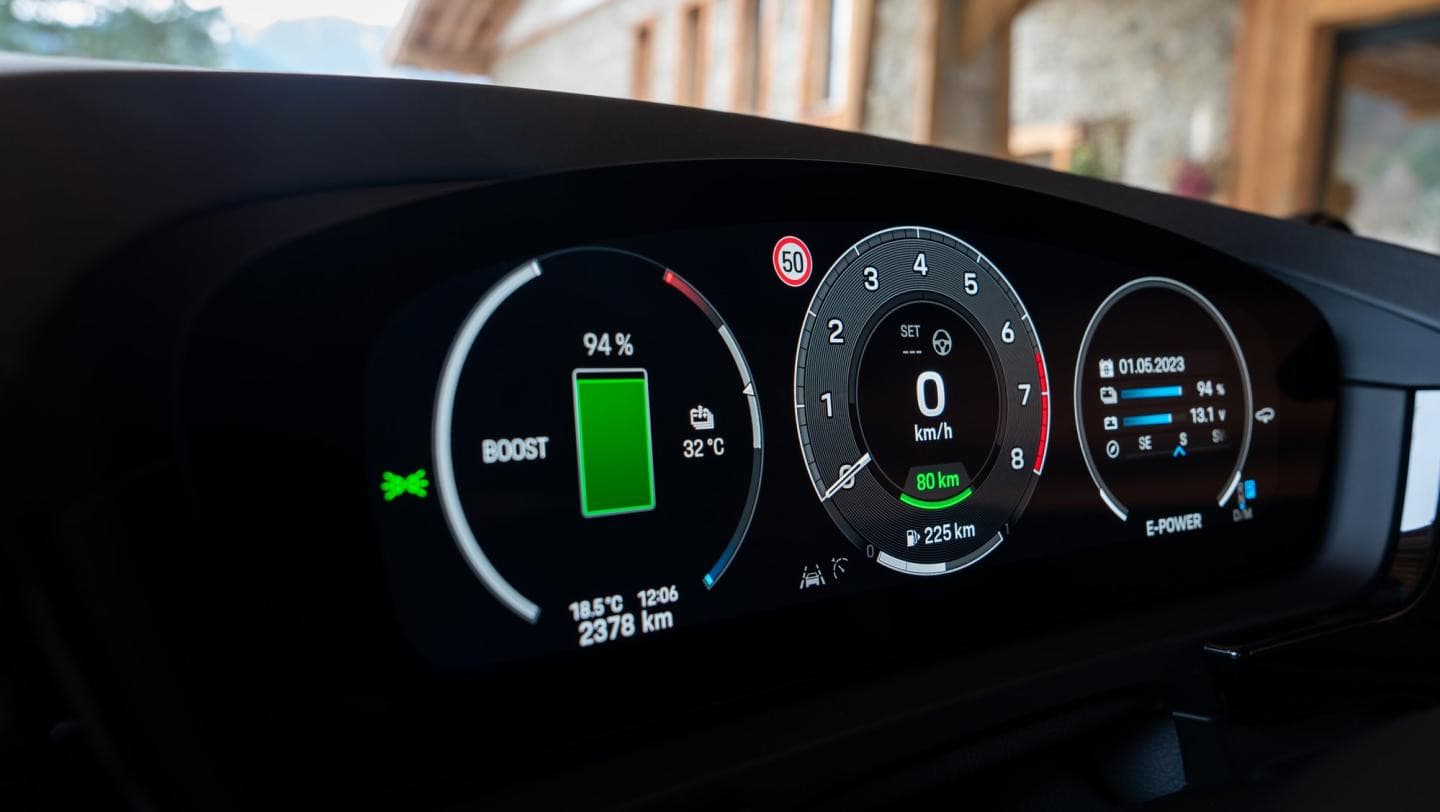
A full battery therefore covers most everyday journeys, provided you charge it often. In E-Power mode, the Cayenne runs on electricity alone for as long as the battery allows.
What is the real-world consumption on your journeys?
It all depends on how often you charge. For the Cayenne S E-Hybrid, Porsche quotes 4.0 to 4.5 l of petrol per 100 km in the weighted combined cycle, plus 19.1 to 19.9 kWh of electricity. This calculation assumes that part of the distance is driven with a charged battery.
With an empty battery, the V6 does the work. Official consumption then rises to between 9.8 and 10.6 l per 100 km, that of a large petrol SUV weighing more than 2.4 tonnes.
- Short trips and charging every night: most kilometres are driven on electricity and filling up with petrol becomes rare
- Long motorway journey: the battery runs down early in the trip, then consumption gets closer to the empty-battery figure
- No charging at all: you mainly pay for petrol without making use of the battery
E-Charge mode recharges the battery on the move using the petrol engine, up to 80%. It is useful for saving electricity for the end of a journey, in town for example, but that energy is paid for in petrol. When braking, the electric motor recharges the battery with up to 88 kW of power.
How long does it take to charge?
The Cayenne E-Hybrid charges on alternating current, from a wallbox or a public charging point. Its 11 kW on-board charger fills the battery in about 2 h 40.
- 11 kW charging point: about 2 h 40 from 0 to 100%
- 9.6 kW charging point: about 3 h 15
- DC rapid charging: not available on the Cayenne E-Hybrid
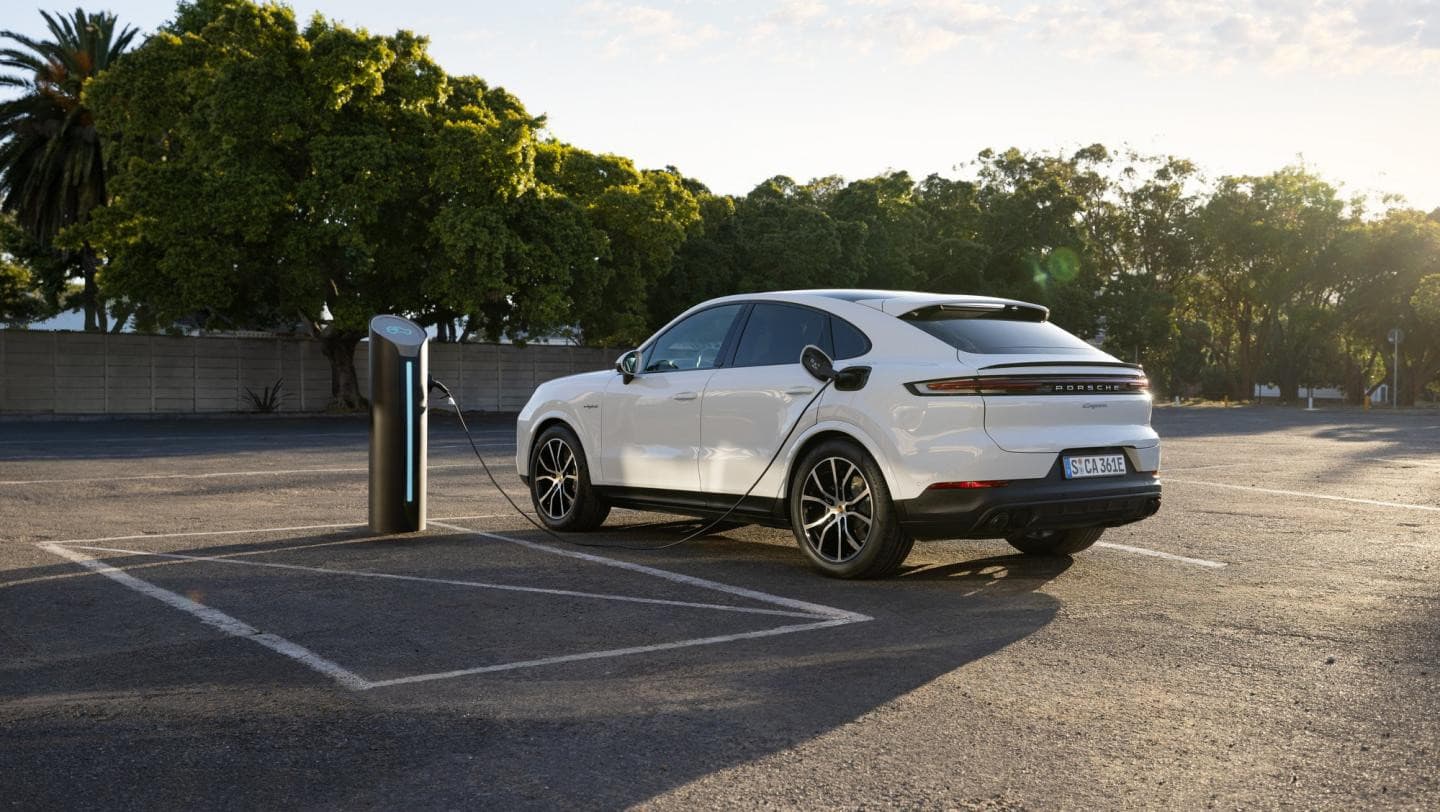
So an evening at home or a morning plugged in at the office gives you a full battery again. On an ordinary household socket, charging takes much longer, hence the value of a wallbox.
It surpasses its predecessor in three respects: electric range, electric motor power and charging speed.
E-Hybrid, S E-Hybrid or Turbo E-Hybrid, what are the differences?
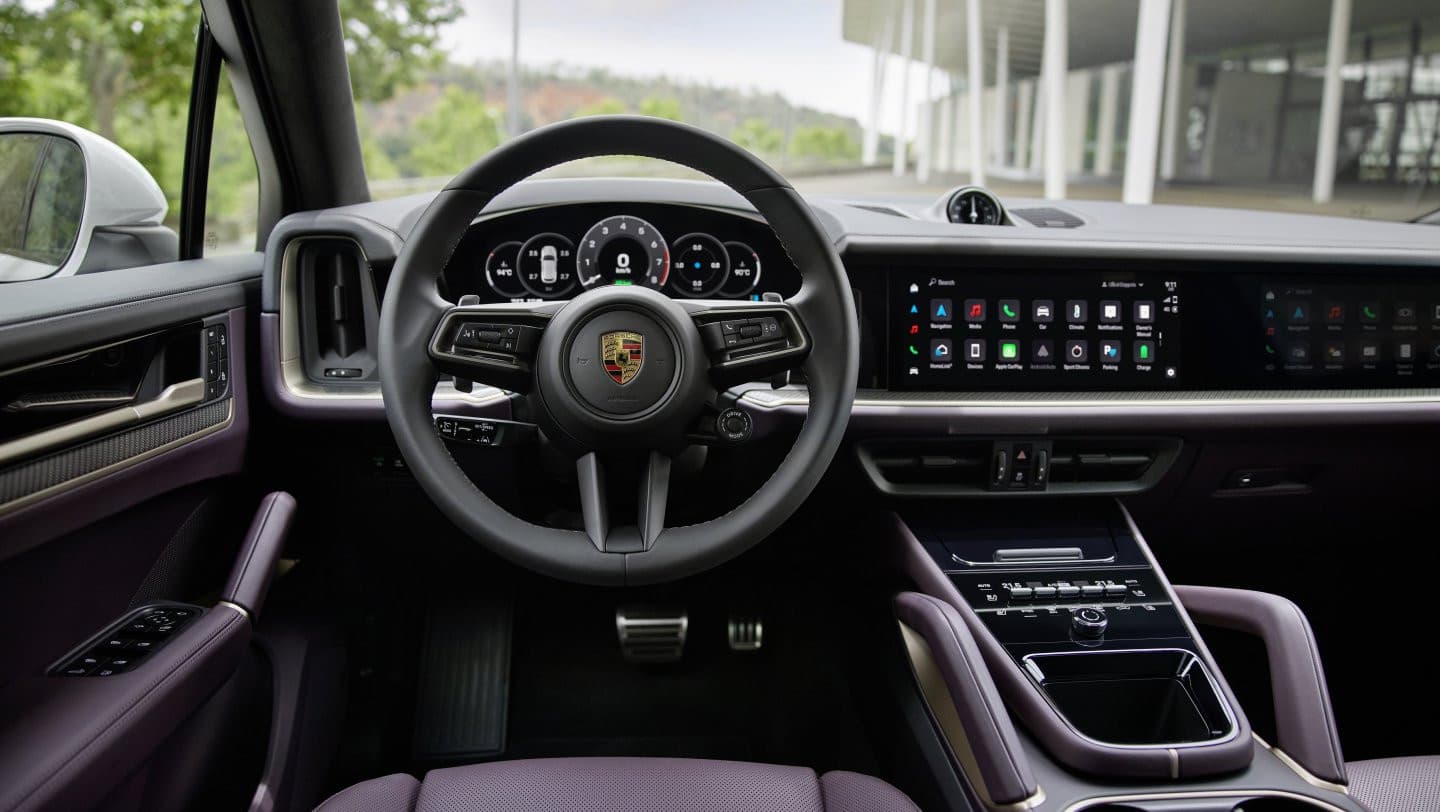
All three versions share the 25.9 kWh battery and the 176 hp electric motor, housed in the eight-speed automatic gearbox. They differ in their petrol engine and their performance, as an SUV or as a Coupé.
- Cayenne E-Hybrid: 304 hp V6, 470 hp in total, 0 to 100 km/h in 4.9 s, 254 km/h, 77 to 83 km on electric power
- Cayenne S E-Hybrid: 353 hp V6, 519 hp in total, 0 to 100 km/h in 4.7 s, 263 km/h, 76 to 82 km on electric power
- Cayenne Turbo E-Hybrid: 599 hp V8, 739 hp in total, 0 to 100 km/h in 3.7 s, 295 km/h, 72 to 77 km on electric power
The S E-Hybrid has 49 hp more than the Cayenne E-Hybrid for almost the same range. It comes as standard with adaptive air suspension and the Sport Chrono package. The Turbo E-Hybrid, the most powerful of the hybrid Cayennes, is mainly about performance and covers slightly fewer kilometres on electric power.
Does the hybrid change the boot and the towing capacity?
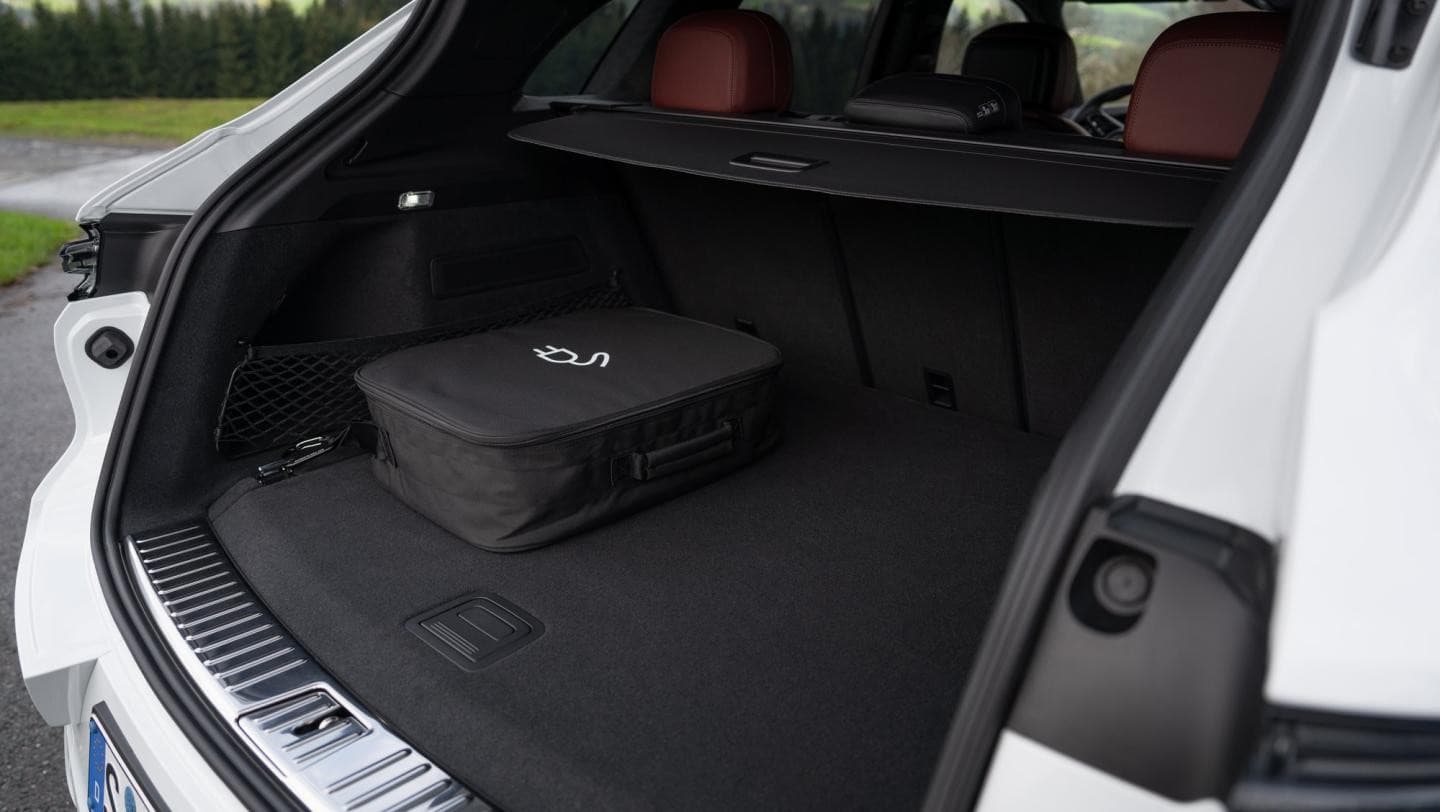
The battery sits under the boot floor. Even so, the Cayenne S E-Hybrid keeps a large load space and can still tow heavy loads.
- Boot: 627 litres, up to 1,563 litres with the rear seats folded
- Towing: up to 3,500 kg with a braked trailer
- Roof load: up to 100 kg with the Porsche roof bars
Cayenne E-Hybrid, BMW X5 xDrive50e or Mercedes GLE 400e?
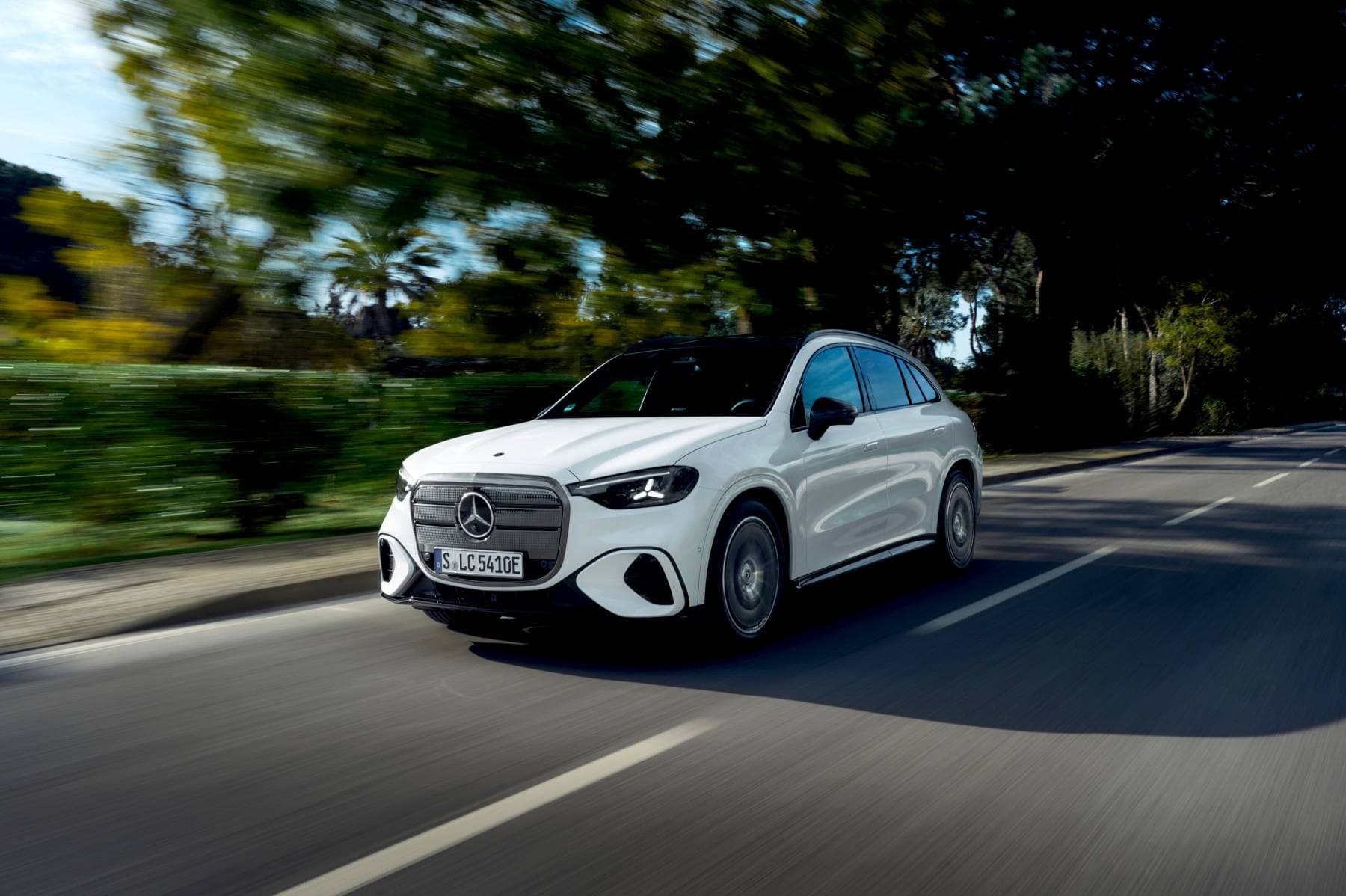
We also offer the BMW X5 xDrive50e and the Mercedes GLE 400e, two plug-in hybrid SUVs of similar size. On electric power, the Cayenne S E-Hybrid covers fewer kilometres than the other two, according to their manufacturers' WLTP figures. It takes the lead on power, boot space and towing.
- Electric range: up to 82 km for the Cayenne, 110 km for the X5 and 109 km for the GLE
- Power: 519 hp for the Cayenne, 489 hp for the X5 and 381 hp for the GLE
- Home charging: 11 kW for the Cayenne and the GLE, 7.4 kW for the X5, which needs about 4 h 30 for a full charge
- Rapid charging: only the GLE accepts a DC charging point, at up to 60 kW
- Boot: 627 litres for the Cayenne, 500 litres for the X5 and 490 litres for the GLE
- Towing: 3,500 kg for the Cayenne, 2,700 kg for the X5
If you want to drive without petrol as often as possible, the X5 and the GLE last longer on their battery. The Cayenne charges faster than the X5, offers the largest boot of the three and tows more than the BMW. For a Cayenne without a petrol engine, our guide to the electric Cayenne compares its three versions.
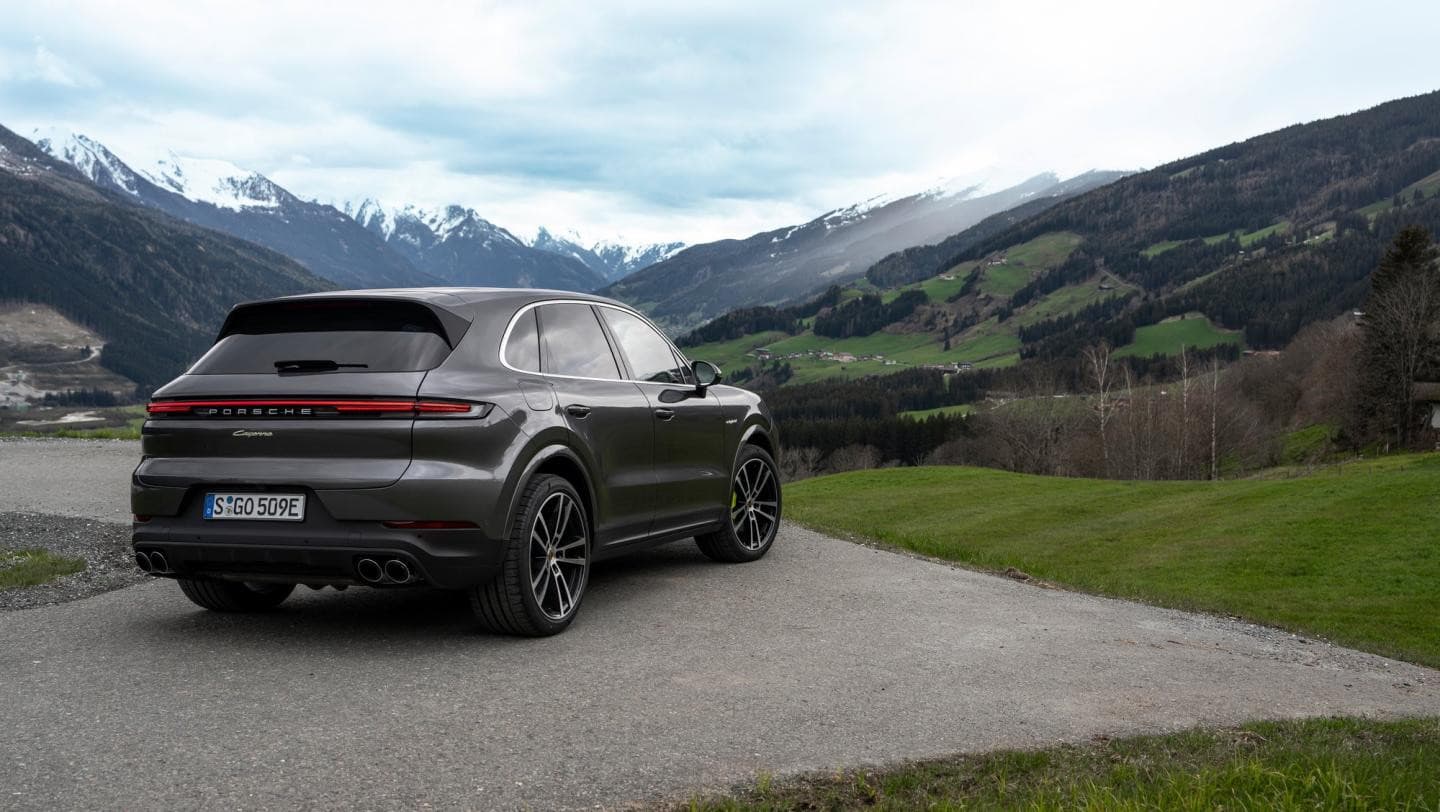
How can you get the Cayenne S E-Hybrid on subscription?
The Cayenne S E-Hybrid in our catalogue is an updated model, first registered at the end of 2024, in quartz grey with a black leather interior. You can get it right now in Luxembourg, Belgium and France.
The car's page lists its equipment, including air suspension, rear-axle steering, the Sport Chrono package, a head-up display, a panoramic roof and an electrically retractable towbar.
It is available for 24 to 60 months in Luxembourg and France, and for 36 to 60 months in Belgium, with 1,000 or 2,000 km per month. Comprehensive insurance, maintenance, summer and winter tyres, taxes and breakdown assistance are all included in one monthly payment.

How much per month?
Porsche Cayenne S E-Hybrid Gris Quartz
Term
Kilometres per month
2 506 €per month
60 months, 1 000 km per month, with a 5 500 € down payment. VAT included
- Insurance
- Maintenance
- Home delivery
You pay for energy yourself, both electricity and petrol, as well as delivery and the kilometres above your allowance.
A plug-in hybrid often appeals to businesses. The tax treatment of a company car depends on the country and on emissions, and our guide to company cars explains what to check before choosing.
FAQ: the Porsche Cayenne E-Hybrid
What is the electric range of the Cayenne E-Hybrid?
Under the WLTP standard, 76 to 82 km for the S E-Hybrid and 77 to 83 km for the Cayenne E-Hybrid in the combined cycle, and up to 90 km in town.
What is its real-world consumption?
It depends on how often you charge. Porsche quotes 4.0 to 4.5 l per 100 km in the weighted cycle for the S E-Hybrid, and 9.8 to 10.6 l with an empty battery.
How long does it take to charge?
About 2 h 40 from 0 to 100% on an 11 kW charging point.
Can it use a rapid charger?
No. It charges on alternating current, at up to 11 kW.
Cayenne E-Hybrid or BMW X5 xDrive50e?
The X5 travels further on electric power, up to 110 km, but charges at 7.4 kW. The Cayenne S E-Hybrid has more power and a larger boot.
How long can I keep it?
From 24 to 60 months in Luxembourg and France, and from 36 to 60 months in Belgium, with 1,000 or 2,000 km per month.
In short
- The Cayenne S E-Hybrid covers up to 82 km on electric power under the WLTP standard, and up to 89 km in town.
- Its real-world consumption depends on how often you charge, between 4.0 and 4.5 l per 100 km in the weighted cycle and between 9.8 and 10.6 l with an empty battery.
- At Turismo, it is available for 24 to 60 months depending on the country, with insurance, maintenance and tyres included.
On the Porsche Cayenne S E-Hybrid page, the monthly payment for your country appears as soon as you pick the duration and mileage.
Sources(7)
- Porsche Newsroom, Porsche présente la troisième version hybride de la gamme Cayenne (26/09/2023)
- Porsche Newsroom, fiche technique du Cayenne S E-Hybrid (09/2023)
- Porsche Newsroom, dossier de presse du nouveau Cayenne, E-Performance
- Porsche Newsroom, la technique hybride du nouveau Cayenne
- Porsche Newsroom, informations produit du Cayenne (valeurs WLTP)
- BMW Group, données techniques du BMW X5 xDrive50e (02/2023)
- Mercedes-Benz Cars UK, GLE SUV et GLE Coupé (production à partir de janvier 2025)